Hispanic Heritage Month
October 07, 2026
Hispanic Heritage Month
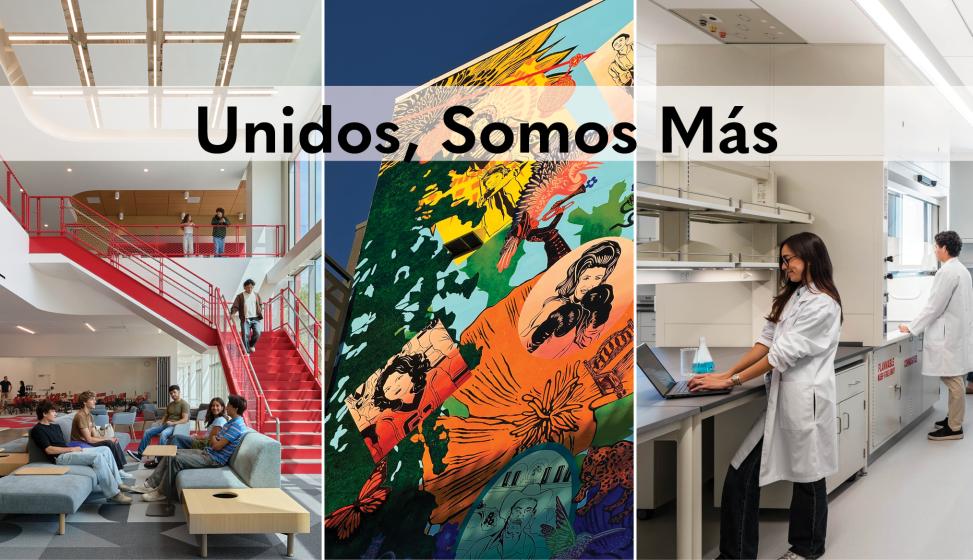
Every year from September 15th to October 15th, National Hispanic Heritage Month celebrates the histories, cultures, and contributions of Hispanic Americans. This year, we're taking the time to honor that legacy by featuring a selection of our projects in and beyond the city of Los Angeles—a place deeply rooted in Hispanic culture and identity. Through these projects, we aim to honor this year’s theme, “Unidos, Somos Mas” (Together, We are More) and hope to reflect on the communities we design for and the traditions that continue to shape the built environment around us.
Las Dahlias: Celebrating Community Through Art and Design
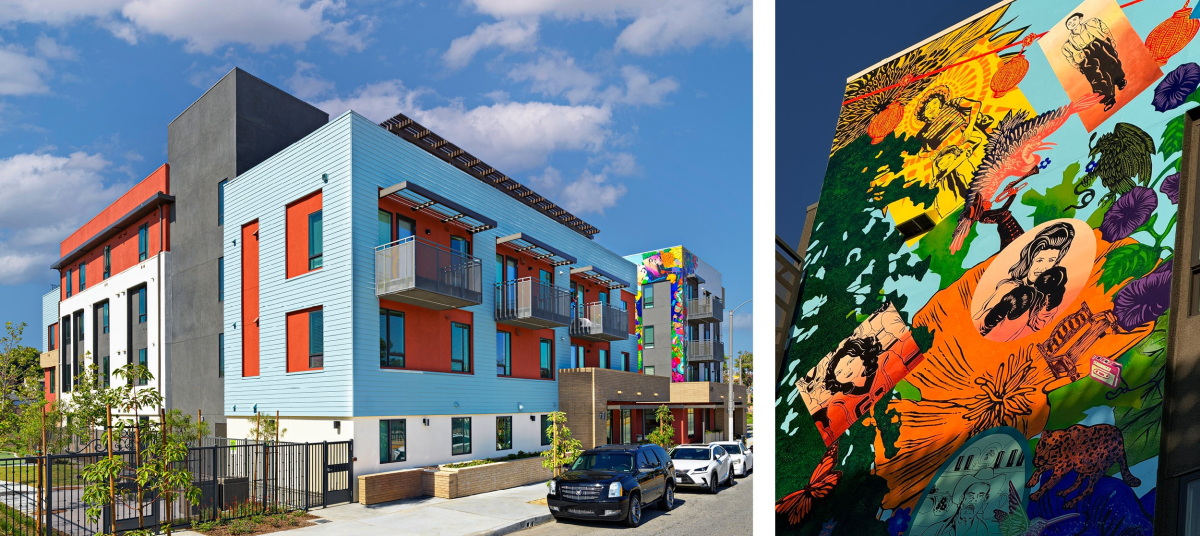
This year’s National Hispanic Heritage Month theme, “Unidos, Somos Más” (“Together, We Are More”), comes to life at Las Dahlias, where affordable housing and public art celebrate the people and cultures of East Los Angeles.
The AC Martin designed project is an affordable, multi-family housing transit oriented development featuring 78 apartment homes for low income or previously unhoused individuals and families.
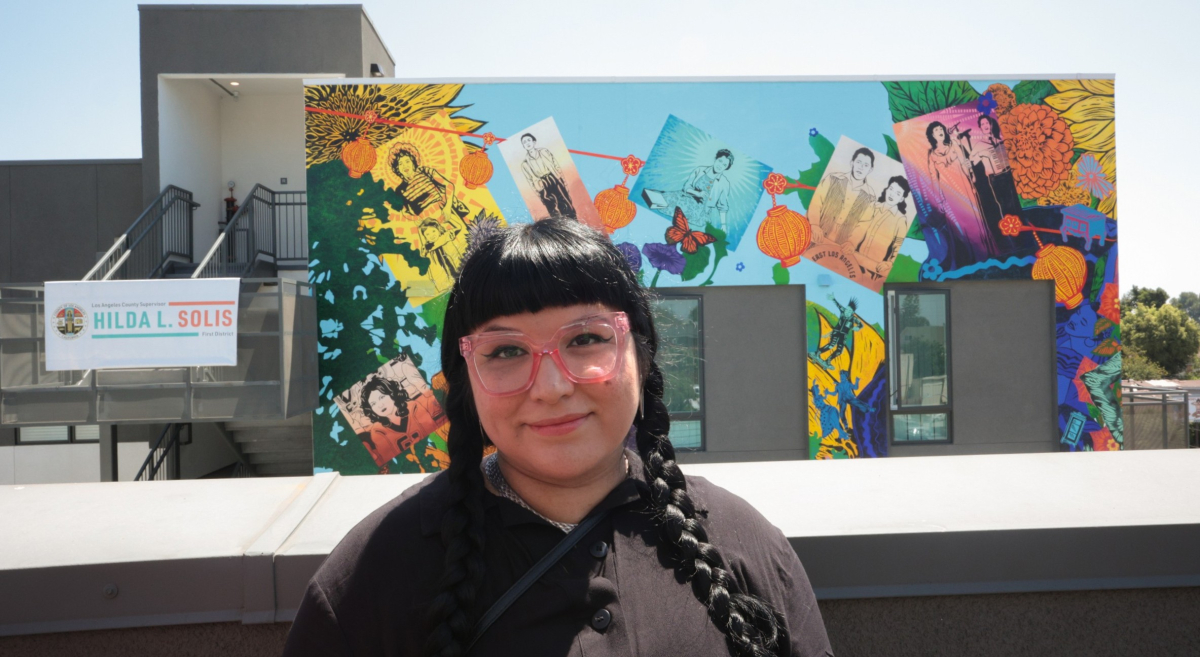
The East L.A. community inspired Stephanie Mercado’s mural that decorates the building. As a Boyle Heights native and emerging Los Angeles based artist, Mercado partnered with National CORE, NowArt L.A. and Los Angeles County to create a vibrant mural titled “East Los Luv.” The vibrant mural brings East L.A.'s rich heritage to life featuring portraits of neighborhood families, local icons, and cultural symbols, such as marigolds, lowriders, and monarch butterflies, celebrating the diverse cultures of the Maravilla neighborhood.
The imagery displayed throughout the mural was intentionally chosen through community engagement workshops and virtual meetings. Mercado wanted the mural to reflect the lived experiences and contributions of local residents, stating, "I wanted to celebrate all of the contributions of people in the neighborhood that may not be recognized." Mercado’s art uplifts the stories and identities that define the neighborhood and the greater East Los Angeles area.
The mural, blending printmaking with illustration, is her first large public project and was completed with the help of family members in just three months. Mercado hopes the mural fosters respect and appreciation for the diverse cultures in East L.A., continuing the tradition of public art as a chronicle of community identity.
Honoring Hispanic Heritage, Building STEM Futures
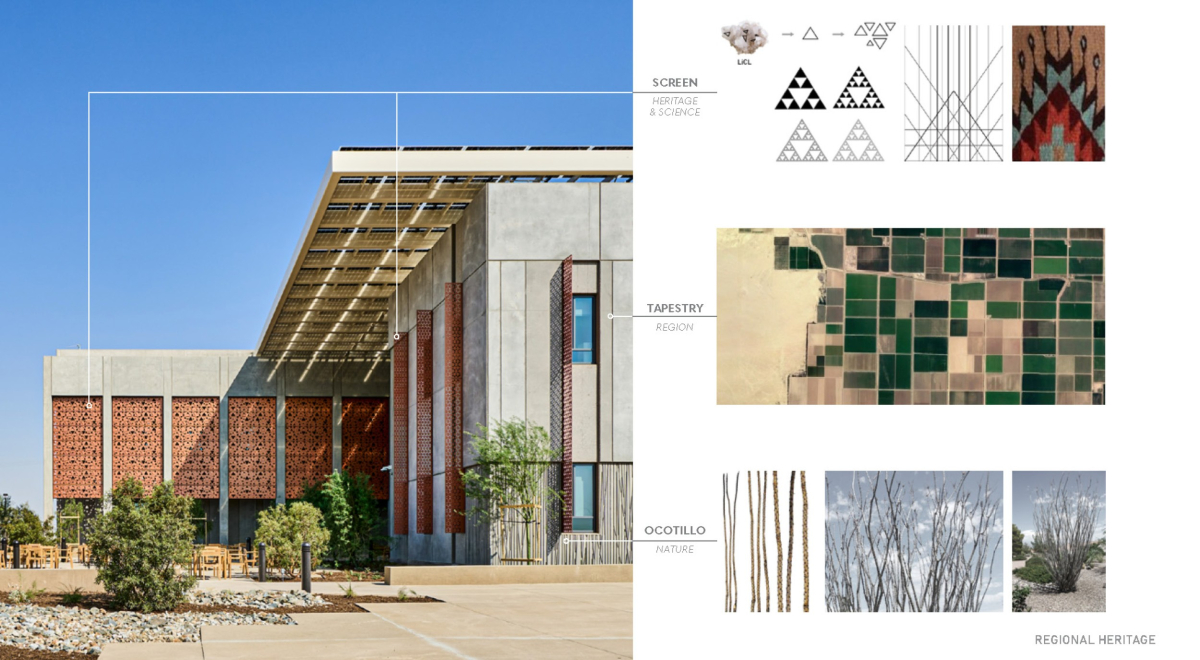
Nestled in California's Lithium Valley, SDSU's Imperial Valley Sciences & Engineering Laboratories, designed by AC Martin, is a beacon for STEM learning in Brawley. This project reflects what it means to be "Unidos, Somos Mas" (together, we are more), as a new generation of scientists and engineers builds opportunity rooted in their own community, ensuring that progress in the Imperial Valley is shaped by the people who live there.
The project's mission is closely tied to the community and culture that surround it. Imperial County's Lithium Valley is a burgeoning economic and energy hub, home to a community rooted in California's long-standing Hispanic heritage. While the lithium industry is new, the region's cultural and historical roots run deep, and SDSU's state-of-the-art building is designed to help build a future where opportunity and community grow together, creating a hub where the next generation of scientists and engineers can learn, train, and build their futures close to home.
In the Calexico Chronicles, SDSU Imperial Valley Dean Guillermina Núñez-Mchiri spoke to the project's goal of developing the next generation of STEM students, noting, "We need to find the talent in our community and build that talent locally." That sentiment speaks to a broader shift taking place in the Imperial Valley: an investment not just in infrastructure, but in the people who call this region home.
U.S. Representative Dr. Raul Ruiz echoed that vision, pointing to Imperial County's high unemployment and low median household income and describing the project as a path toward homegrown scientists who study, graduate, and go on to work in high-paying jobs right in the Imperial Valley, spreading opportunity back into the community that shaped them. For a region often overlooked in conversations about California's economic growth, this building represents something different: a long-term commitment to keeping talent, opportunity, and investment rooted locally.
Designed for one of the most demanding desert climates in North America, the architecture translates environmental realities into spacial and material strategies. Deep arcades, perforated metal screens, and shaded courtyards create micro-climates that support outdoor campus life while moderating solar exposure. Tilt-up concrete walls provide thermal mass and durability while serving as a canvas for textured pattern inspired by the valley's agricultural landscape and spirit of scientific discovery.
Designing for Belonging: Expanding STEM Opportunities Across the CSU
In recognition of Hispanic Heritage Month, AC Martin is highlighting two higher education projects connected by a shared purpose: expanding access to STEM education and creating spaces where students feel welcome, supported, and prepared to succeed. The Autodesk Technology Engagement Center at California State University, Northridge (CSUN) and the Engineering & Technology Building at Cal Poly Humboldt reflect our commitment to programming and designing learning environments informed by student feedback. Their connection also extends beyond architecture through initiatives that support Hispanic and Latino students and other communities historically underrepresented in STEM.
Connecting Education to Opportunity
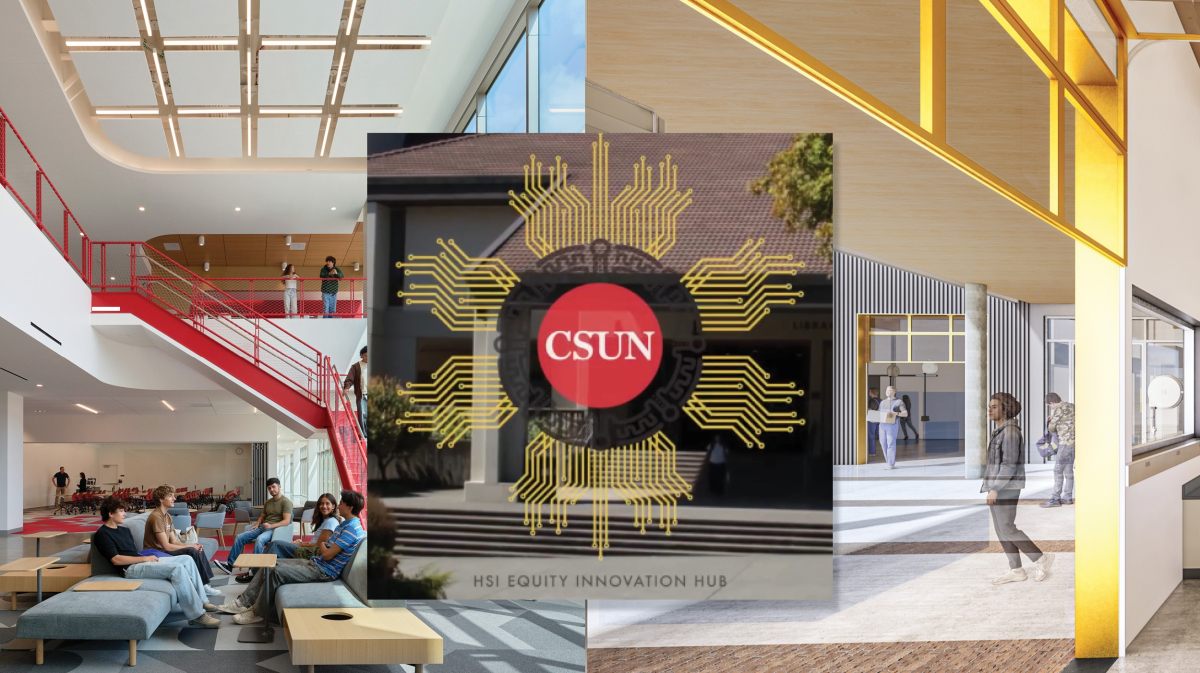
CSUN’s Global Hispanic Serving Institution (HSI) Equity Innovation Hub, housed within the Autodesk Technology Engagement Center, works with university, community, and industry partners to expand educational and career opportunities. Cal Poly Humboldt is part of the Hub’s network of collaborators. Grant support from the Hub is helping Cal Poly Humboldt advance opportunities for students through "Raíces y Rutas: Roots and Routes to Careers". The fellowship combines paid internships with regional employers, mentorship, and career preparation. Its approach recognizes students’ cultural backgrounds, identities, and community connections as strengths they bring to STEM professions. For AC Martin, this connection brings together two campuses where we have designed spaces to support hands-on learning, collaboration, and student success. More about R2 here
Design That Begins with Listening
At CSUN, AC Martin led workshops with university leadership, faculty, staff, and a student focus group to establish priorities for the Autodesk Technology Engagement Center. Their input helped shape a welcoming, adaptable environment that makes STEM exploration approachable and reflects the diversity of the students it serves. Engineering and prototyping labs, makerspaces, study areas, and a student success center bring opportunities to learn, create, and connect into one facility. At Cal Poly Humboldt, student feedback informed our programming and design approach for the Engineering & Technology Building. Teaching and research laboratories, an interdisciplinary makerspace, fabrication areas, and gathering spaces support the university’s emphasis on learning by doing. Flexible spaces encourage students across disciplines to exchange ideas and apply their knowledge to practical challenges.
Supporting the Next Generation
Hispanic Heritage Month offers an opportunity to celebrate Hispanic and Latino contributions while supporting the next generation of scientists, engineers, and innovators. Through a design process that includes student voices, AC Martin helps universities create environments that support their students’ ambitions. Together, these projects reflect our belief that thoughtful design can help expand opportunity—giving students places to explore their interests, build confidence, and see themselves in the future of STEM.