Submitted by angela.barker on
June 01, 2026
Advancing Inclusive Student Housing at SCUP Pacific
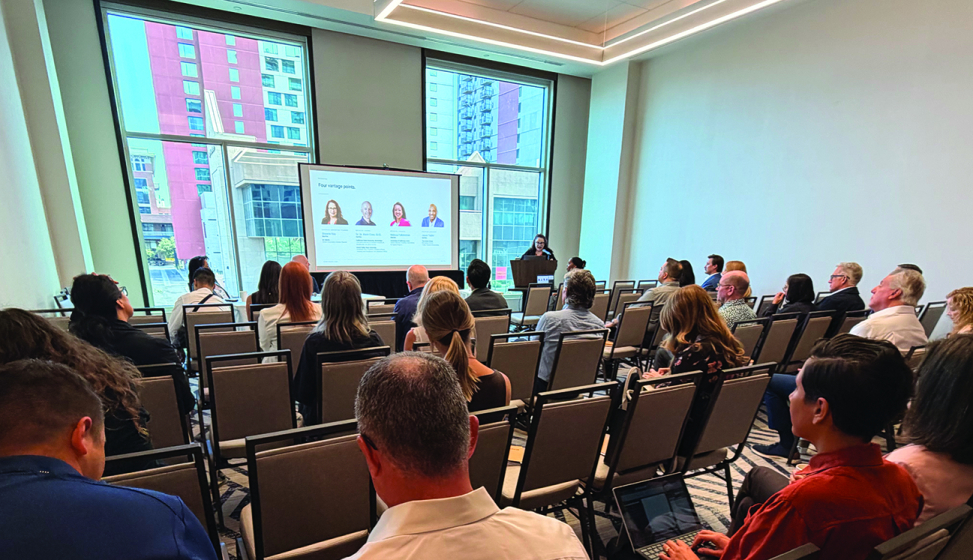
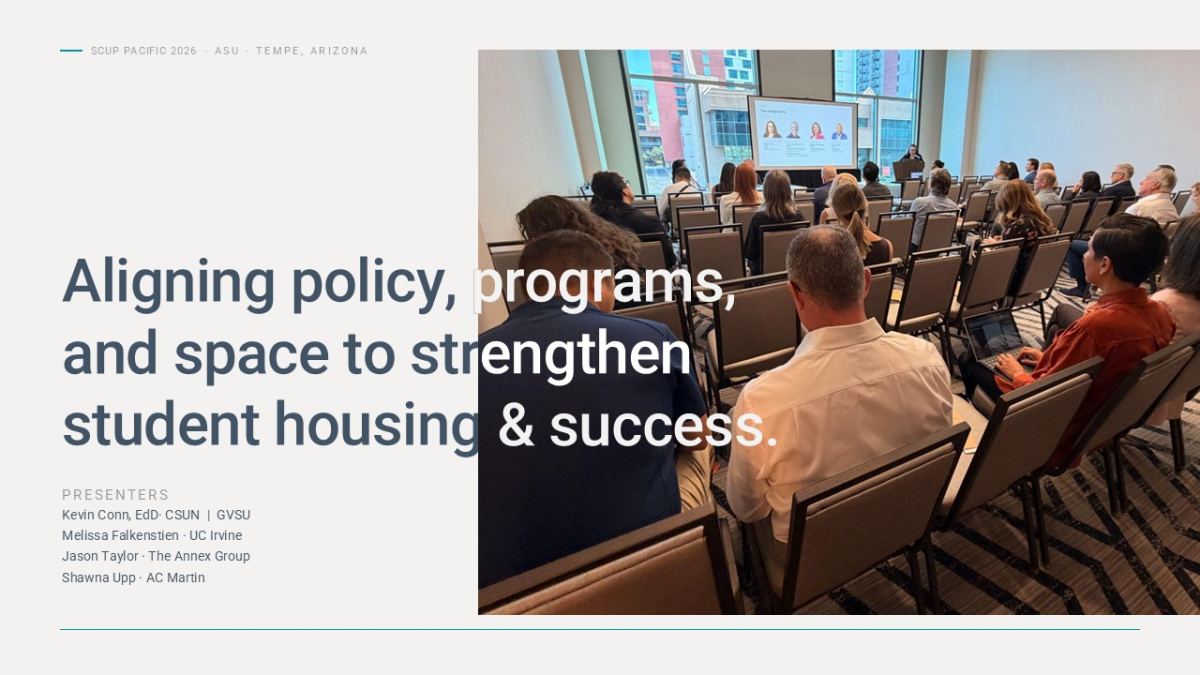
AC Martin joined higher education leaders on a panel at the Society of College and University Planning (SCUP) Pacific Conference in Tempe, Arizona to explore how policy, programming, and the built environment can work together to strengthen student housing and student success. The panel, “Aligning Policy, Programs, and Space to Strengthen Student Housing and Success,” brought together Dr. Kevin Conn, formerly with CSU Northridge; Melissa Falkenstein of UC Irvine; and Jason Taylor of The Annex Group for a conversation moderated by AC Martin Senior Planner, Shawna Upp.
Well-being, enrollment, budgets, and limits on identity-based programs are pressing. Housing is a lever. Coordinated choices in policy, programs, and space create safer, more welcoming homes that support student success while managing cost and risk. The panel discussed practical ways to shape housing where more students belong, beyond code. Current students, campus housing, student affairs, facilities, and a developer share what to change first, how roles align, and a take-home toolkit you can adapt.
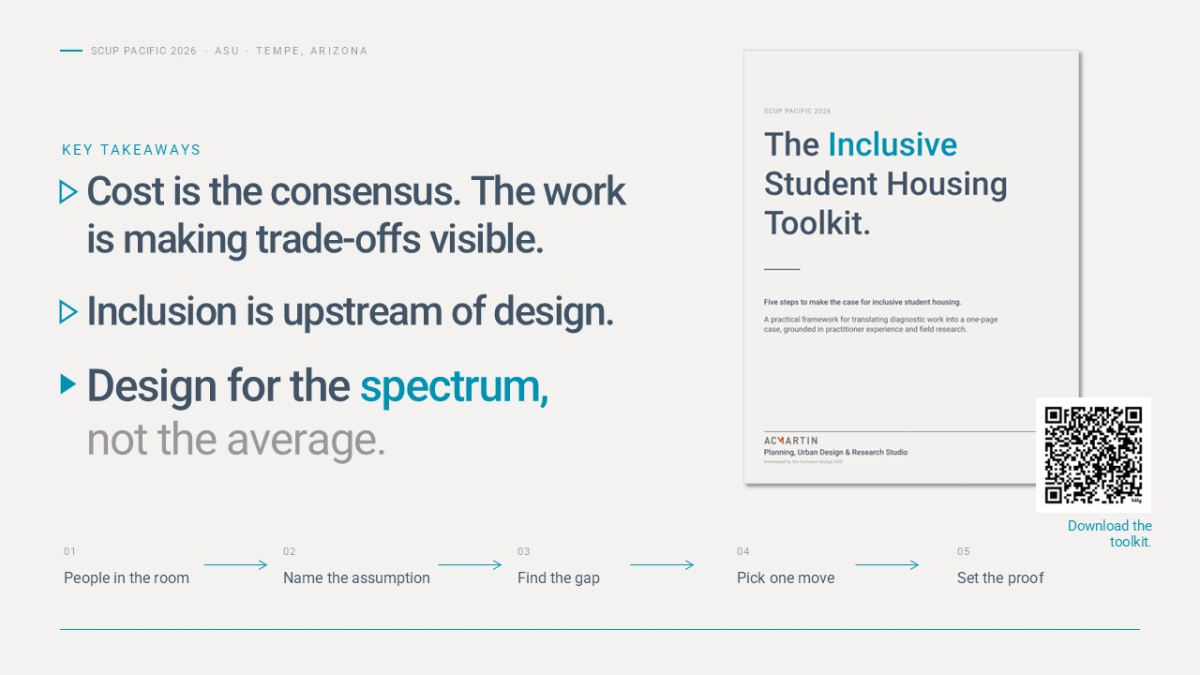
A central takeaway was that inclusive design must begin well before design decisions are made. It should be embedded in early planning and programming, informed by meaningful engagement with the people who will use and operate the building. While an audience survey identified cost as the primary perceived barrier to inclusive design, the panel emphasized that many impactful strategies can be implemented without significantly increasing project costs.
The discussion reinforced a guiding principle behind AC Martin’s inclusive design work: design for the spectrum, not the average. By recognizing the range of experiences, identities, and needs within a student population, colleges and universities can create environments that support more students and strengthen their sense of belonging.
The panel concluded with an introduction to AC Martin’s Inclusive Student Housing Toolkit, a five-step process that helps project teams identify who is represented in decision-making, examine assumptions, uncover gaps, select meaningful design or policy responses, and establish measures of success. Following is a link to the Toolkit: