Submitted by angela.barker on
April 23, 2026
AIA|LA 1.5°C Symposium on Climate Change Recap
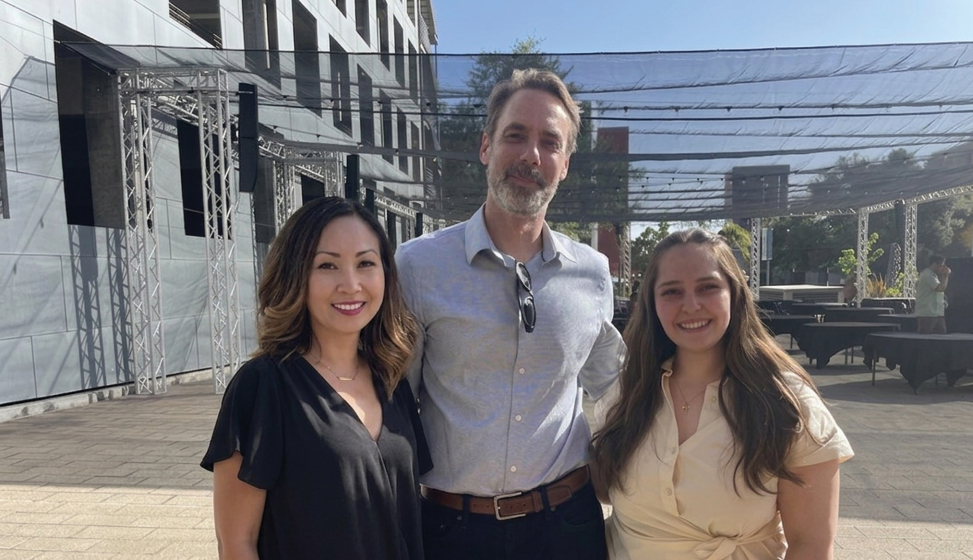
AC Martin Sustainability ERG members Athenel Trazo, Matt Wister, and Hiba Charek-Brewster (photographed above left to right) participated in the 2026 AIA Los Angeles 1.5°C Symposium on Climate Change on April 17, 2026.
By Hiba Charek-Brewster, Senior Designer, AC Martin
Beyond Policy: Key Takeaways from the 9th Annual 1.5°C Symposium
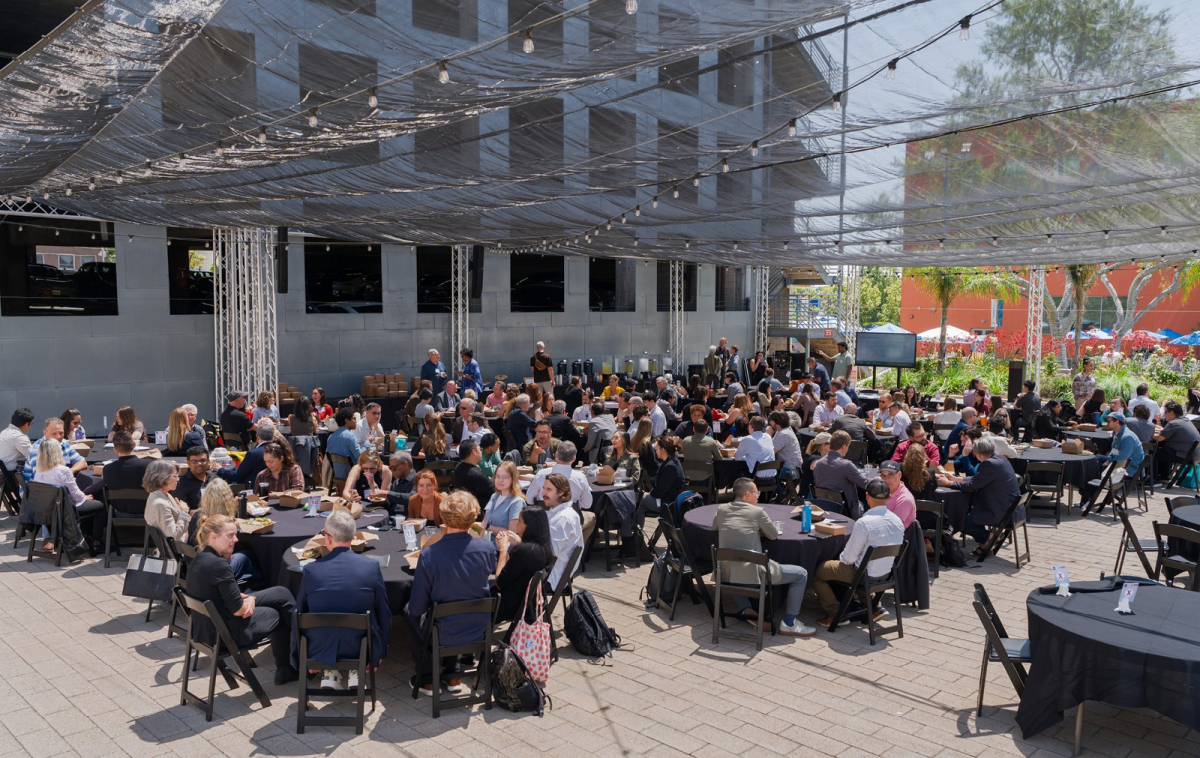
On Friday, April 17, 2026, the AIA Los Angeles Committee on the Environment (COTE) convened the 9th Annual 1.5°C Symposium on Climate Change. Unlike prior years that centered on policy frameworks and aspirational targets, this year’s symposium marked a decisive shift toward actionable strategies. Against a backdrop of political uncertainty and escalating climate urgency, the event explored how architects, designers, firms, and communities can move beyond intention and scale tangible climate action across project types and historically siloed sectors. The discussions made clear that the role of the designer is no longer peripheral to climate solutions, it is central.
Takeaway 1: Shaping Policy Through Practice
The symposium opened with a powerful reframing of architects’ influence on public policy. Rather than viewing policy as a constraint, speakers emphasized that design practice itself can be a catalyst for systemic change. Angela Brooks, Principal at Brooks Scarpa Huber Architects, articulated how her firm intentionally aligns its work with the AIA COTE Top Ten measures, placing particular emphasis on density, beauty, and resilience as drivers of environmental and social impact.
Brooks underscored the critical importance of early decision-making, noting that approximately 70 percent of a project’s design decisions are made within the first 10 percent of the design process. These early moments, often overlooked, carry outsized consequences for carbon impact, resilience, and long-term performance. For Brooks, understanding this timeline empowers designers to intervene where it matters most.
Perhaps most compelling was her call for architects to “create their own work” by actively engaging with policy. By cultivating advocates and developing fluency in zoning and legislative processes, designers can shape the regulatory landscape itself. Brooks cited projects that directly influenced policy changes, including contributions to California’s SB-79, demonstrating that practice-led advocacy can result in meaningful legislative outcomes. Her message was clear: by understanding policy, architects can move from compliance to authorship.
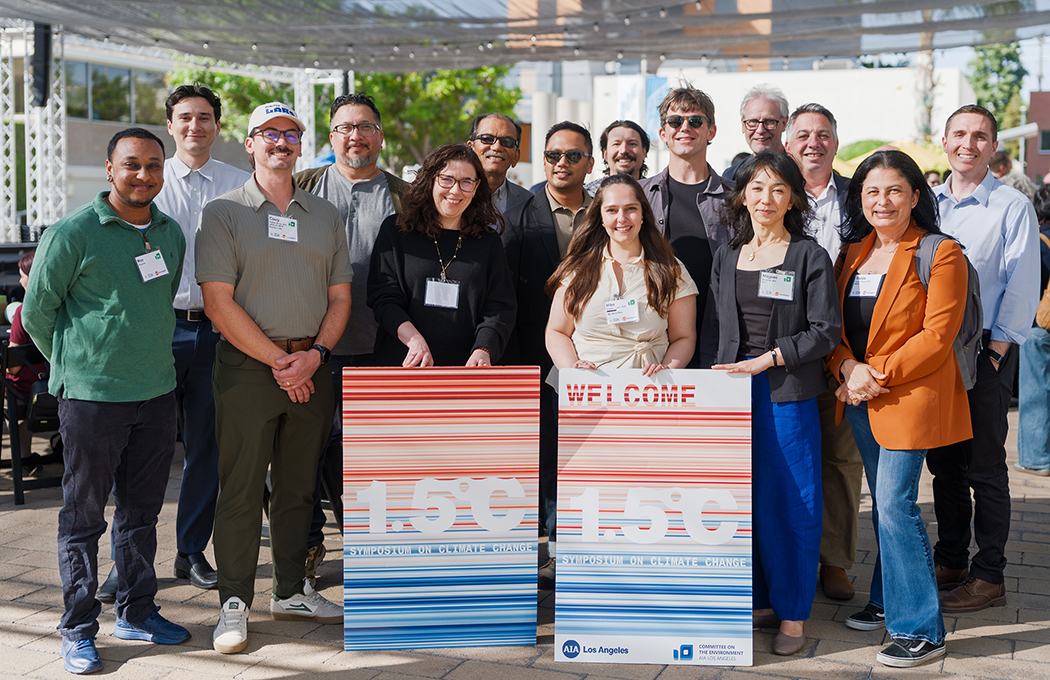 The AIA|LA COTE committee welcomes all to the Symposium. Hiba Charek-Brewster, committee member, actively planned the Symposium.
Takeaway 2: The Next Frontier of Carbon aka Embodied Carbon and Passive Design
As California advances toward a fully renewable electricity grid by 2045, the symposium highlighted a crucial shift in sustainability priorities; from operational carbon to embodied carbon and passive design strategies. Several presentations reinforced that the materials we choose and the systems we embed at the outset will define buildings’ climate impact for decades.
A standout example was the Global Security Operations Center (GSOC) for Genentech, presented as a model of whole-building, net-zero carbon design. The project achieved a 72% reduction in total lifecycle carbon, with its mass timber structure alone reducing upfront carbon by 38% compared to a conventional concrete alternative. In addition to its environmental benefits, the use of Cross-Laminated Timber (CLT) proved economically advantageous, outperforming both steel and nail-laminated timber (NLT) due to the smaller foundation it required.
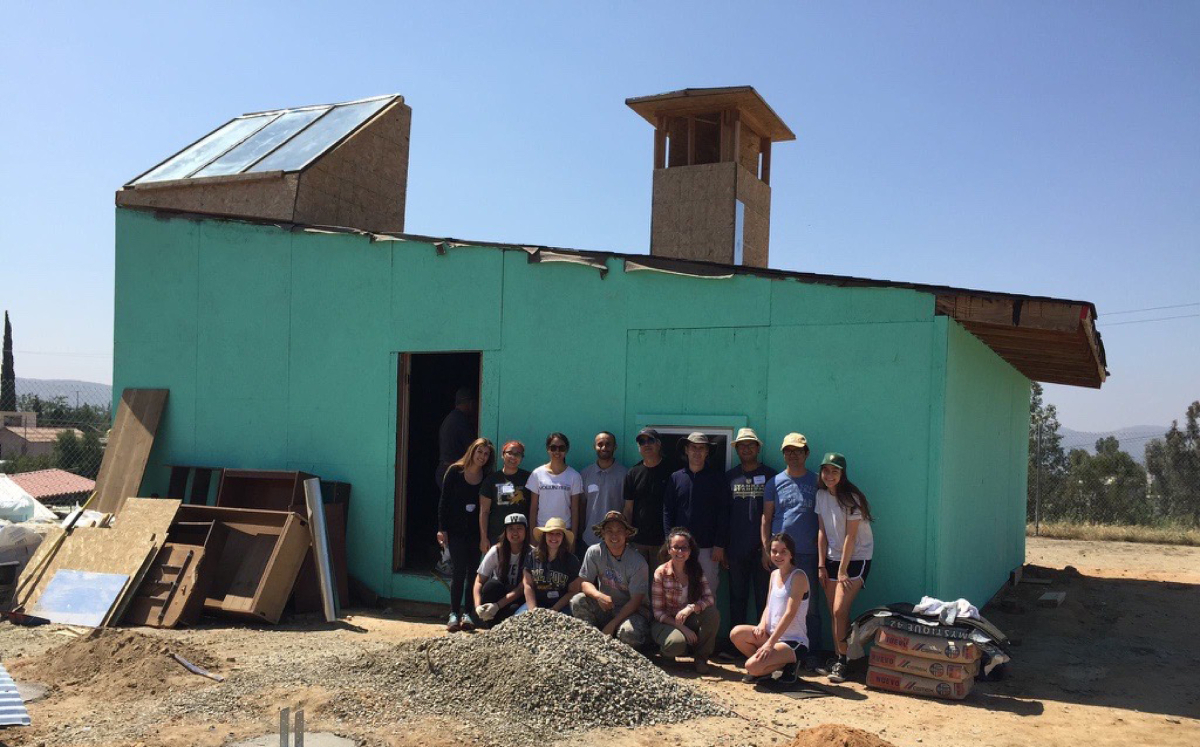
The discussion around passive cooling was equally urgent, with speakers framing it as a non-negotiable necessity for California’s warming climate. Pablo La Roche presented a suite of essential strategies, including smart ventilation, evaporative cooling ponds, radiant slabs, and hybrid filtered ventilation, as the backbone of zero- and low-carbon thermal comfort. These approaches are critical to ensuring buildings remain habitable and resilient amidst intensifying heat, a reality I experienced firsthand while working with Professor La Roche on the community project presented in the session in Tecate, Mexico, where I had the privilege of seeing these strategies in practice. (Photo below)
Takeaway 3: Architecture for Humanity and Community Resilience
The most resonant message of the symposium emerged from its focus on humanitarian responsibility and community-centered design by the Pritzker Prize winner Shigeru Ban. “Architects are responsible for all people” became a defining refrain, reinforcing the ethical dimension of climate-responsive architecture.
Dean Maltz of Shigeru Ban Architects exemplified this ethos through the firm’s disaster relief work. Drawing on innovative materials such as paper tubes, the firm creates dignified, temporary shelters for communities affected by natural disasters. This work is rooted in the Japanese concept of Mottainai; a respect for resources and an aversion to waste, which extends beyond material efficiency to fostering buildings that communities value, maintain, and make their own.
The symposium further emphasized that effective climate resilience must be built with, not for, communities. Michael H. Anderson and a panel of local leaders showcased projects that align infrastructure investment with neighborhood priorities, from heat mitigation planning to affordable housing and transit-oriented development. Their work demonstrated how community-powered design can advance equitable climate resilience while correcting longstanding disparities.
Aaron Vaden-Youmans and fellow panelists reinforced the necessity of integrating top-down policy with bottom-up, community-driven action. Climate solutions, they argued, are most durable when they emerge from genuine collaboration where communities have agency in shaping the environments they inhabit. This alignment ensures that resilience is not only technical, but also social, inclusive, and lasting.
In conclusion, the 9th Annual 1.5°C Symposium offered a compelling roadmap for the built environment’s role in confronting the climate crisis. By pairing innovative, low-carbon materials with early design decision-making, policy literacy, and community-centered practice, architects can drive change that is both measurable and just. More than a call to action, the symposium affirmed that meaningful climate progress lies beyond policy alone, it resides in everyday practice, collective responsibility, and the courage to reimagine architecture’s impact on the world.